One drain or several?
Test before you plunge. Run water in a second fixture on the same floor and flush a toilet. If only the first drain is slow, the clog is in its trap or branch. If the toilet gurgles, the tub fills when you run the sink, or a basement floor drain wells up, the blockage is in the building drain, and plunging a sink won't reach it. That situation has its own page: main line clog.
Clogged kitchen sink
Kitchen lines clog from grease that cools and sticks to the pipe wall, catching starch, coffee grounds and food scraps. A disposal grinds food finely but doesn't dissolve it, and fibrous peels and eggshell grit settle in the trap and the first horizontal run. On a double sink, water rising in the second bowl is a sign the blockage is below the point where the two bowls join. Pouring fat into the trash rather than down the drain prevents most of it.
Clogged bathtub drain and shower drain
Hair is the problem here. It wraps around the stopper linkage in a tub, collects under a shower strainer, and binds with soap into a mat that water seeps through slowly and then not at all. Most tub stoppers lift out or unscrew, and the clog often comes out with them. A plastic barbed drain strip reaches a few inches further. A hair catcher over the strainer prevents most repeat visits.
Bathroom sink, laundry and floor drains
Bathroom sinks clog on the pop-up stopper, which catches hair on its rod; unscrewing the pivot nut under the sink releases the stopper for cleaning. Laundry standpipes clog with lint, and a washer that suddenly overflows the standpipe mid-cycle usually means a partial blockage below it. Basement floor drains are often the first place a main line problem shows, so don't assume a floor drain clog is local.
What to try, in this order
- Pull the stopper or strainer and clean it. On a tub or a bathroom sink this alone clears many clogs.
- Plunge. Use a cup plunger on sinks and tubs, block the overflow opening with a wet rag, and give it a dozen firm strokes.
- Use a hand auger through the drain opening, turning as you feed it, until you feel the blockage give.
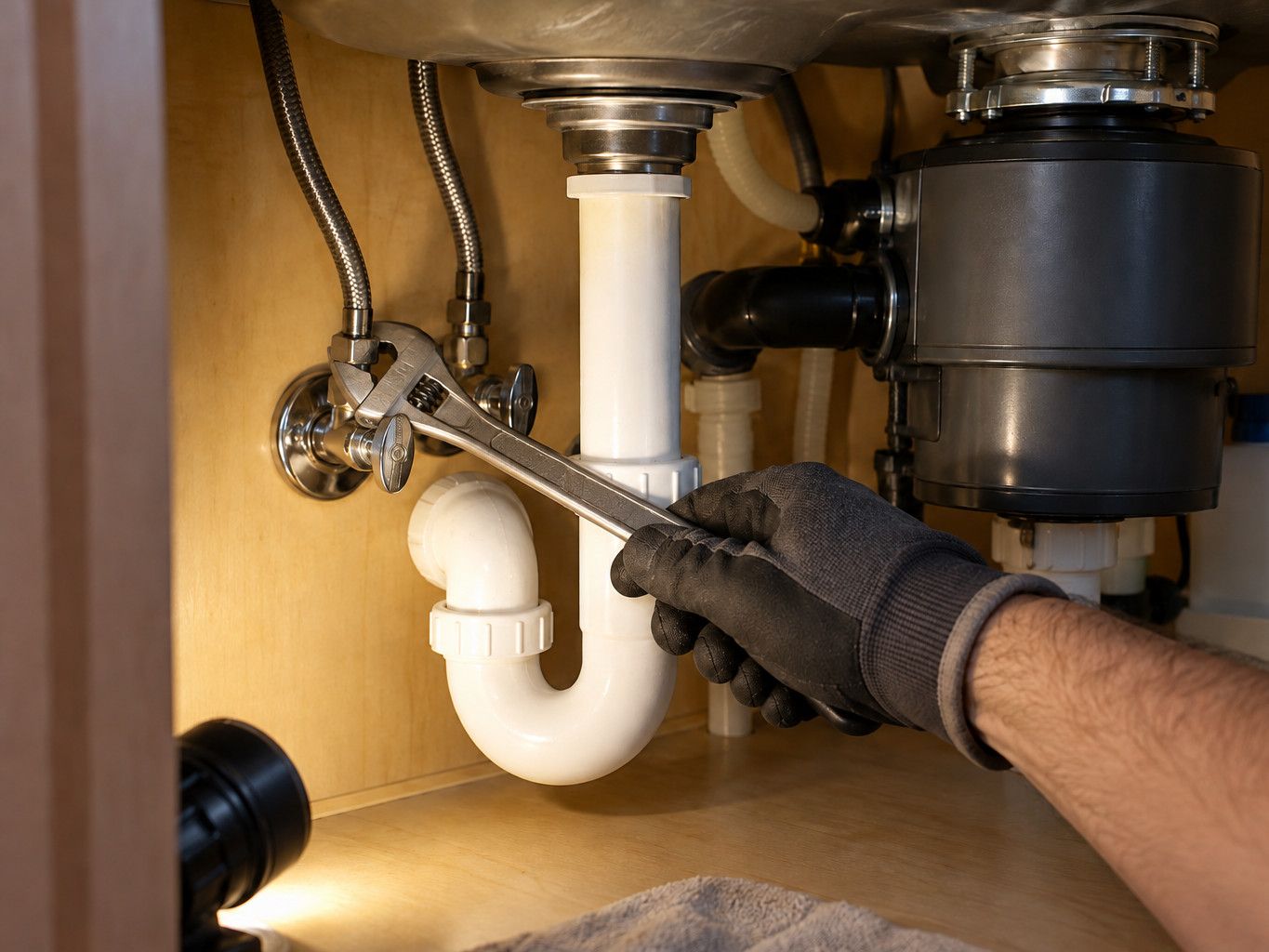
- Remove the P-trap under a sink, with a bucket underneath, and clean it. The code requires every trap to hold a water seal of 2 to 4 inches (IPC 2021 §1002.4), so put it back the way it came off, gaskets included.
- Stop there. If the clog is past the trap, more force from above tends to pack it tighter.
When to stop and call
Call when water rises in another fixture, when the same drain clogs again within weeks, when you smell sewage, or after a chemical opener has sat in the line. A plumber will use a small cable machine through the fixture or remove the trap and go in from there. For recurring clogs, ask about the method on our drain cleaning page and whether a camera is worth it.
What clearing one blocked fixture costs
Single-fixture work is among the cheaper plumbing calls. Fixr's January 2025 figures give $150 to $300 for a backed-up drain, and its plumber-rate guide lists $150 as a typical flat price to unclog a drain. The price climbs when the clog is in a line that can only be reached by pulling a toilet, when the call happens after hours, or when the fixture's own parts, a corroded trap or a broken pop-up, need replacing at the same visit.
More about single-drain clogs
Why does my kitchen sink back up when the dishwasher runs?
The dishwasher drains into the sink drain, usually through the disposal or a branch tailpiece. When that line is partly blocked, the dishwasher’s pumped water has nowhere to go and rises in the sink. Clearing the kitchen branch usually fixes both.
Why does the shower drain smell even when it drains fine?
Hair and soap build a film inside the drain body and trap that decays. Removing the strainer and cleaning the upper drain often ends the smell. A smell with no buildup points to a dry trap or a vent problem instead.
Can a slow drain cause a leak?
Yes. Water held in a slow drain puts pressure on slip-joint nuts and old gaskets under the sink, and an overflowing tub or basin can reach the floor. Fix the clog and check the trap connections afterward.
Is it safe to use a plunger after a chemical opener?
No. Plunging can splash the chemical back out of the drain. If a chemical has already been used, flush with plenty of water if the drain allows it, and tell the plumber what product it was.
Sources
- Sewer Line Cleaning Cost, Fixr, updated January 31, 2025.
- Cost to Hire a Plumber, Fixr, updated January 30, 2025.
- International Plumbing Code 2021, Chapter 10: Traps, Interceptors and Separators (§1002.4, trap seals), International Code Council.
Reviewed September 27, 2026. Found an error? Write to admin@plumbingrepairquotes.com.