Main sewer line clog symptoms
A blocked building drain shows itself at the drains nearest the floor first, because backed-up water comes out of the first opening below its level. Look for these signs together rather than one at a time.
- Water rises in the tub or shower when a toilet is flushed.
- Toilets gurgle, or several drains in different rooms are slow at once.
- A basement floor drain or laundry standpipe overflows when the washer empties.
- Sewage smell near floor drains or the cleanout.
A single slow sink with everything else normal is a branch clog; the clogged drain guide covers it.
What is usually in the line
Tree roots are the classic cause in older clay and cast iron laterals: they enter at joints, feed on the moisture and catch everything that follows. Wipes marketed as flushable, paper towels and feminine products form mats that cables have to cut through. Grease from the kitchen coats the building drain over years. And sometimes the pipe itself has failed: a joint that has shifted, a sagging section that holds sewage, or fiber pipe that has flattened.
How a plumber clears it
- Open the cleanout slowly, since the line may be under pressure from the backed-up water.
- Run a cable machine with a cutting head to open the blockage and let the line drain.
- Pull the cable back and look at what came out. Roots, wipes or grease tell different stories.
- Recommend a camera if the clog looks structural or if this is not the first backup.
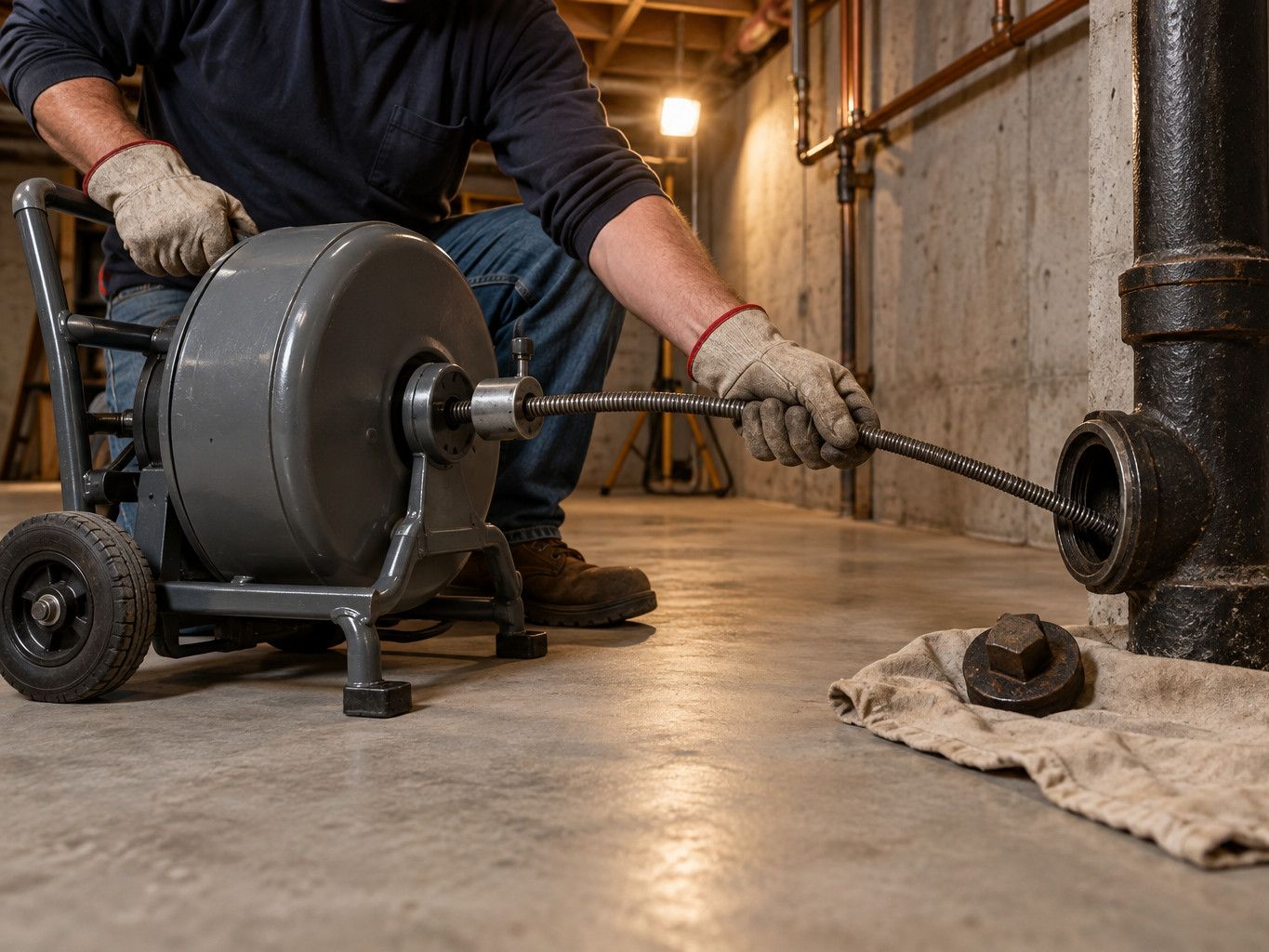
Where there is no cleanout, the plumber usually removes a toilet and runs the cable through the floor flange. IPC 2021 §708.1.3 requires a cleanout at the junction of the building drain and sewer or within 10 feet of piping upstream of it, so a house without one is a good candidate to have one added.
What clearing the main line costs
| Item | National figure |
|---|---|
| Snaking or rodding the line | $150–$375 |
| Clearing a clogged sewer line | $250–$800 |
| Video inspection added to the job | $300–$600 |
| Emergency call-out fee on top of labor | $200–$300 |
| Transportation fee for emergency calls | $50–$200 |
Sources: Fixr, Sewer Line Cleaning Cost (January 31, 2025) and Cost to Hire a Plumber (January 30, 2025), which gives $150 an hour as a standard emergency rate plus the fees shown.
Some companies answer 24/7 and some offer same-day service during business hours; many charge the emergency fees above after hours, on weekends and on holidays. If the backup is slow and nothing is overflowing, asking for the first morning appointment can save the call-out fee.
Backwater valves for houses that flood from the street
When the public sewer itself surcharges, water can flow backward into a house. The International Residential Code (§P3008.1) requires a backwater valve on fixtures whose rims sit below the manhole cover of the next upstream manhole of the public sewer. Many older houses with basement bathrooms were built without one. Installing a valve means opening the floor at the building drain, and some cities help pay for it; ask your sewer department.
If it comes back
A second backup within a year means the cause is still in the pipe. Ask for the camera footage and a written description of what it shows, then compare repair methods on the sewer line repair page. If the camera shows grease or scale rather than damage, hydro jetting is the usual next step.
Main line questions while you wait
Is a blocked sewer the city’s problem?
Usually not, but check the street. If neighbors also have backups, the city sewer main may be blocked, and the city’s sewer department should be called first. If only your house is affected, the blockage is almost always in your own building drain or lateral.
Can I pour a chemical cleaner into the main line?
Don’t. It won’t reach a clog that far down in useful strength, it sits in the pipe with the sewage, and it puts the plumber at risk when the line is opened.
Can we keep using the toilets while we wait?
No. Every flush adds water that has only one place to go, and that place is the open drain closest to the floor. Use no water at all until the line is cleared.
Why did the backup happen after heavy rain?
In older cities, storm water and sewage share pipes, and a full public sewer can push water back into houses whose basement fixtures sit below street level. A backwater valve is the usual protection.
Sources
- Sewer Line Cleaning Cost, Fixr, updated January 31, 2025.
- Cost to Hire a Plumber, Fixr, updated January 30, 2025.
- International Plumbing Code 2021, Chapter 7: Sanitary Drainage (§708, cleanouts), International Code Council.
- International Residential Code 2021, Chapter 30: Sanitary Drainage (§P3008, backwater valves), International Code Council.
Reviewed September 27, 2026. Found an error? Write to admin@plumbingrepairquotes.com.