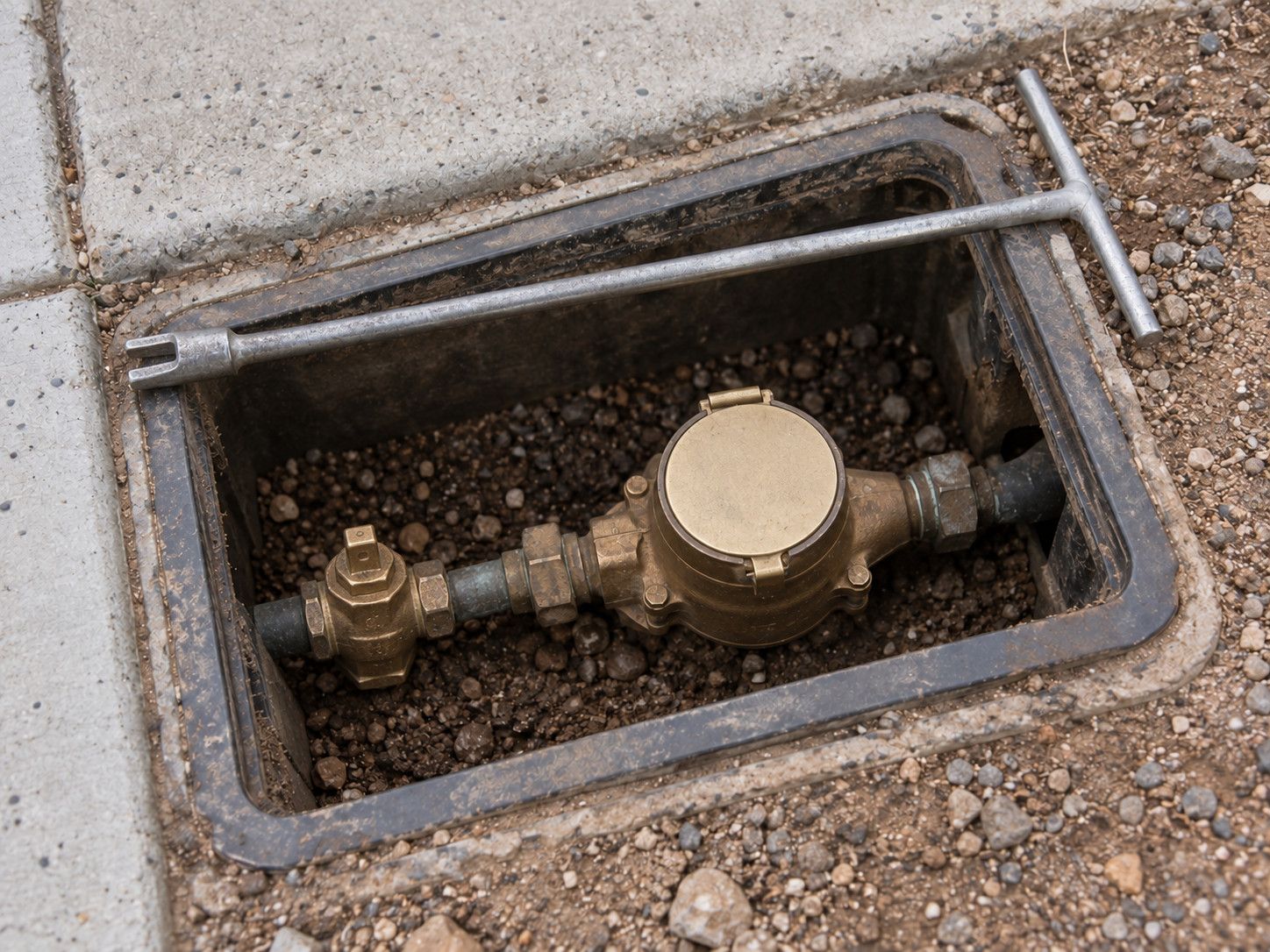
Who is responsible for the water line?
In a typical arrangement, the water utility owns the main in the street and the connection up to the meter or the curb stop, and the property owner owns everything from there to the house. Some utilities draw the line at the property line instead, and a few maintain the whole service. Your utility's customer service line or website will say exactly where its responsibility ends, and that answer decides who pays.
Signs of a service line leak
- A wet, soft or unusually green strip in the yard along the pipe's route, even in dry weather.
- Water pressure that has dropped across the whole house.
- A higher water bill without a change in use.
- A meter that keeps moving while the house's main shutoff is closed.
Confirm it with the meter
EPA's meter test, reading the meter before and after two hours without water use, proves that water is leaving the system. To put the leak on the service line specifically, close the main shutoff inside the house and watch the meter's leak indicator. If it still moves, the water is escaping between the meter and the house. If it stops, the leak is inside, and our leak detection page is the next step.
Repair or replace
A single leak in a sound line can be excavated and repaired with a coupling. A line that has leaked before, is made of galvanized steel or lead, or has been damaged along its length is usually replaced. Replacement can be done by open trench or by trenchless methods that pull a new line through the old one's path or bore a new route between two pits.
| Job | National figure |
|---|---|
| Main water line, repaired (average $1,000) | $500–$2,000 |
| Trenchless water line replacement, per linear foot | $75–$150 |
| Replacing the main shut-off valve only | $250–$1,000 |
| Replacing a pressure regulator | $250–$1,000 |
Source: Fixr, Water Main Repair Cost, updated January 31, 2025. Restoration of driveways and landscaping is extra.
Lead service lines
Many older houses still have a lead service line, or a lead section at either end. EPA's Lead and Copper Rule Improvements, announced in October 2024, require most drinking water systems to identify and replace lead service lines within 10 years. Utilities run replacement programs under that rule, and many replace the private side too, sometimes at no charge to the owner and sometimes with a cost share. Before paying for a new line yourself, ask the utility whether your address is on its inventory and whether a program covers it. Any new pipe and fittings must meet EPA's lead limits for drinking water.
Materials you may find
Copper is the most common service line material in many older areas; polyethylene and PEX are common in newer ones. Galvanized steel narrows with rust over time, and lead is soft, dull gray, and scratches to a bright silver. A plumber can identify the material at the point where the line enters the house, next to the main shutoff.
Working with the utility
Replacing a service line usually needs a permit, and the utility has to shut off the curb stop, which it may do only by appointment. Freezing climates set a minimum burial depth, and the inspector checks it before backfill. Budget time for these steps. If the curb stop or the house valve is seized, the quote may include replacing it; our main water shut off valve page explains the difference between the two.
Service line questions
How deep is the water line buried?
Deep enough to stay below the local frost line, which varies from a few inches in warm regions to several feet in cold ones. The building department sets the minimum where you live.
Can the line be replaced without digging up the yard?
Often. Trenchless methods pull or bore a new line between two small pits, one at the meter and one at the house. Obstacles such as other utilities and rock can still force some excavation.
Will the water company pay for the repair?
Usually not for the part beyond the meter or curb stop, which belongs to the owner in most places. Many utilities do pay for or subsidize replacing lead service lines, including the private side, under their replacement programs.
Is a service line protection plan worth it?
It depends on the age and material of the line and on what the plan excludes. Read the coverage limit and the restoration clause; some plans pay for the pipe but not for the driveway above it.
Sources
- Water Main Repair Cost, Fixr, updated January 31, 2025.
- Fix a Leak Week, U.S. Environmental Protection Agency, updated March 13, 2026.
- Lead and Copper Rule Improvements, U.S. Environmental Protection Agency, updated December 29, 2025.
- Lead content limits for pipes, fittings, fixtures, solder and flux (Safe Drinking Water Act §1417), U.S. Environmental Protection Agency, updated May 19, 2026.
Reviewed September 27, 2026. Found an error? Write to admin@plumbingrepairquotes.com.