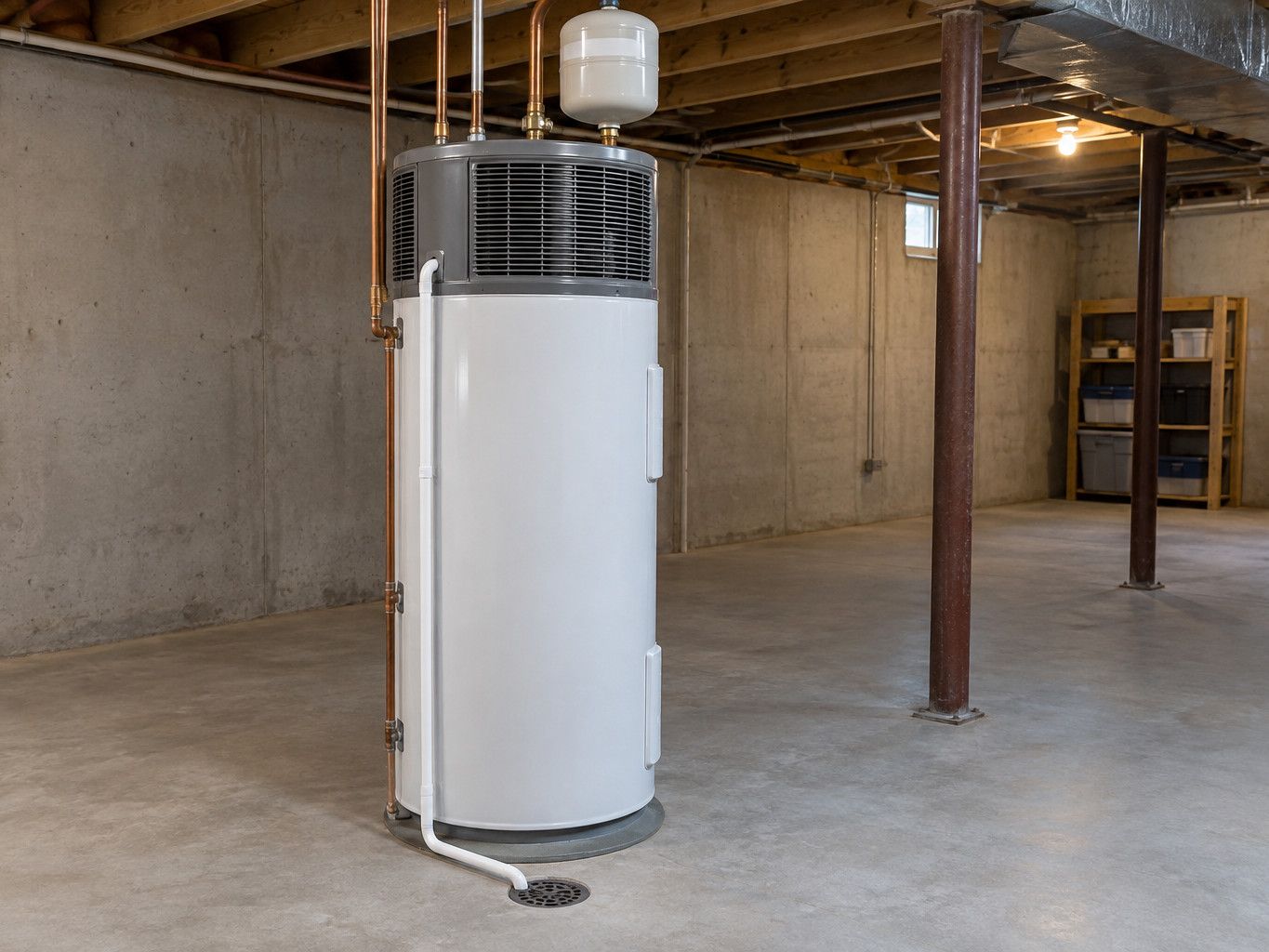
How a heat pump tank heats water
A small compressor and fan sit above the tank. The fan draws room air across a cold coil, a refrigerant carries that heat to the water, and cooler, drier air comes out. Most units also have ordinary electric elements and switch to them when demand outruns the heat pump, which is why they are often called hybrid heaters. The side effects are useful in some houses and a nuisance in others: the room gets cooler and drier, and the unit hums while it runs.
What it costs and what it saves
Installed prices run higher than for a standard electric tank, and the savings come back over several years.
| Figure | Value | Source |
|---|---|---|
| Installed cost, national range | $1,200–$4,600 | Fixr, January 2026 |
| Electric tank, installed, for comparison | $500–$3,500 | Fixr, January 2026 |
| Annual bill savings, household of four | about $550 | ENERGY STAR |
| Savings over the unit's life | more than $5,610 | ENERGY STAR |
| Payback on the price difference | about 3 years | ENERGY STAR |
ENERGY STAR compares its certified models with a standard electric resistance water heater. Savings against a gas heater depend on local gas and electric rates and are usually smaller.
Installation requirements: air, power and a drain
Most installation problems come from putting the unit where a tank used to fit. ENERGY STAR's guidance covers the three things to check before you buy.
- Air. About 700 cubic feet of surrounding air, roughly a 10-by-10-foot room with a 7-foot ceiling. Smaller closets need louvered doors or ducting, which the manufacturer specifies.
- Temperature. Surrounding air of 40 degrees or more. Below that, the unit runs on its backup elements.
- Power. The most common type needs a dedicated 240-volt outlet. Models that use 120-volt outlets are now sold in many markets and can often plug into an existing circuit.
- Drain. The coil makes condensate, like an air conditioner. It needs a floor drain, a laundry standpipe or a small pump.
Everything else follows the same code items as any tank: a relief valve discharge pipe, an expansion tank where the supply has a check valve or regulator, and a pan where a leak would cause damage. Our water heater replacement cost page lists them with code references.
Tax credits, rebates and the 2029 standard
Three things changed for buyers in the past two years, and older articles still describe the first one as available.
- The federal credit ended. The IRS page for the Energy Efficient Home Improvement Credit says it covers improvements made through December 31, 2025. It listed heat pump water heaters under a $2,000 annual limit. Units installed in 2026 don't qualify.
- Rebates are local. Some electric utilities and state energy offices still pay rebates on heat pump water heaters. Amounts and eligibility change often, so check your utility's website before you sign a quote.
- Federal standards tighten in 2029. The Department of Energy's amended standards for consumer water heaters apply on and after May 6, 2029. They govern new units made after that date; nothing already installed has to change.
Heat pump or tankless?
They solve different problems. A heat pump tank cuts the electricity used to heat water and keeps a stored supply. A tankless unit, usually gas-fired, ends standby losses and delivers continuous hot water up to its flow limit, but needs a larger gas line and new venting. In a house with no gas service, the heat pump tank is the practical efficiency upgrade. In a house with gas and a big demand for simultaneous showers, compare it with tankless water heater installation line by line.
Sizing and recovery
In heat pump mode, recovery is slower than with electric elements. Installers often suggest a tank one size larger than the one being replaced, so the heat pump can do most of the work without falling back on the elements. The first-hour method on our water heater size page applies, with that margin added.
Repairs specific to heat pump models
Beyond the usual tank parts, these units add a compressor, a fan, a refrigerant circuit, an air filter and a condensate line. A clogged filter or drain is the most common service call, and the least expensive one. Refrigerant repairs need a technician certified to handle refrigerants, which some plumbing companies don't employ, so ask before booking. Tank failures and relief valve issues are handled as on any heater; see water heater repair.
HPWH questions owners ask
Is there still a federal tax credit for these heaters in 2026?
No. The IRS says the Energy Efficient Home Improvement Credit, which covered heat pump water heaters, can be claimed for improvements made through December 31, 2025. Work done in 2026 doesn’t qualify. Utility and state rebates are separate and change often.
Will it work in a cold garage?
ENERGY STAR’s guidance is surrounding air of 40 degrees or more. In colder spaces the unit leans on its backup electric elements, and the savings shrink. In most climates, a basement or an interior utility room is a better spot than an unheated garage.
Can it replace a gas water heater?
Yes, where there is room, a drain and power. Most models need a dedicated 240-volt circuit, so the quote often includes an electrician. Newer 120-volt plug-in models can avoid that, at the cost of slower recovery.
How noisy is it?
It runs a compressor and a fan, so it makes a steady hum while heating, much like a dehumidifier. Avoid a closet that shares a wall with a bedroom.
Sources
- Water Heater Installation Cost, Fixr, updated January 27, 2026.
- Save More with ENERGY STAR Certified Heat Pump Water Heaters, ENERGY STAR (EPA/DOE).
- Is a Heat Pump Water Heater Right for Your Home?, ENERGY STAR, February 2, 2024.
- Energy Efficient Home Improvement Credit, Internal Revenue Service.
- Consumer Water Heaters: energy conservation standards and compliance dates, U.S. Department of Energy.
Reviewed September 27, 2026. Found an error? Write to admin@plumbingrepairquotes.com.